K-CAB, HK inno.N’s new drug with blockbuster success, Rose to No. 1 in outpatient prescription sales
K-CAB, HK inno.N’s new drug with blockbuster success, Rose to No. 1 in outpatient prescription sales
- K-CAB, the new GERD treatment, recorded KRW 20.8 billion in April outpatient prescription sales
- K-CAB Outpaces Global Blockbusters to Claim its Top Spot; the Only Korean new drug in Top 10
- Clinical Data Reveals Marked Outperformance over PPIs at the World’s Largest Gastroenterology Conference
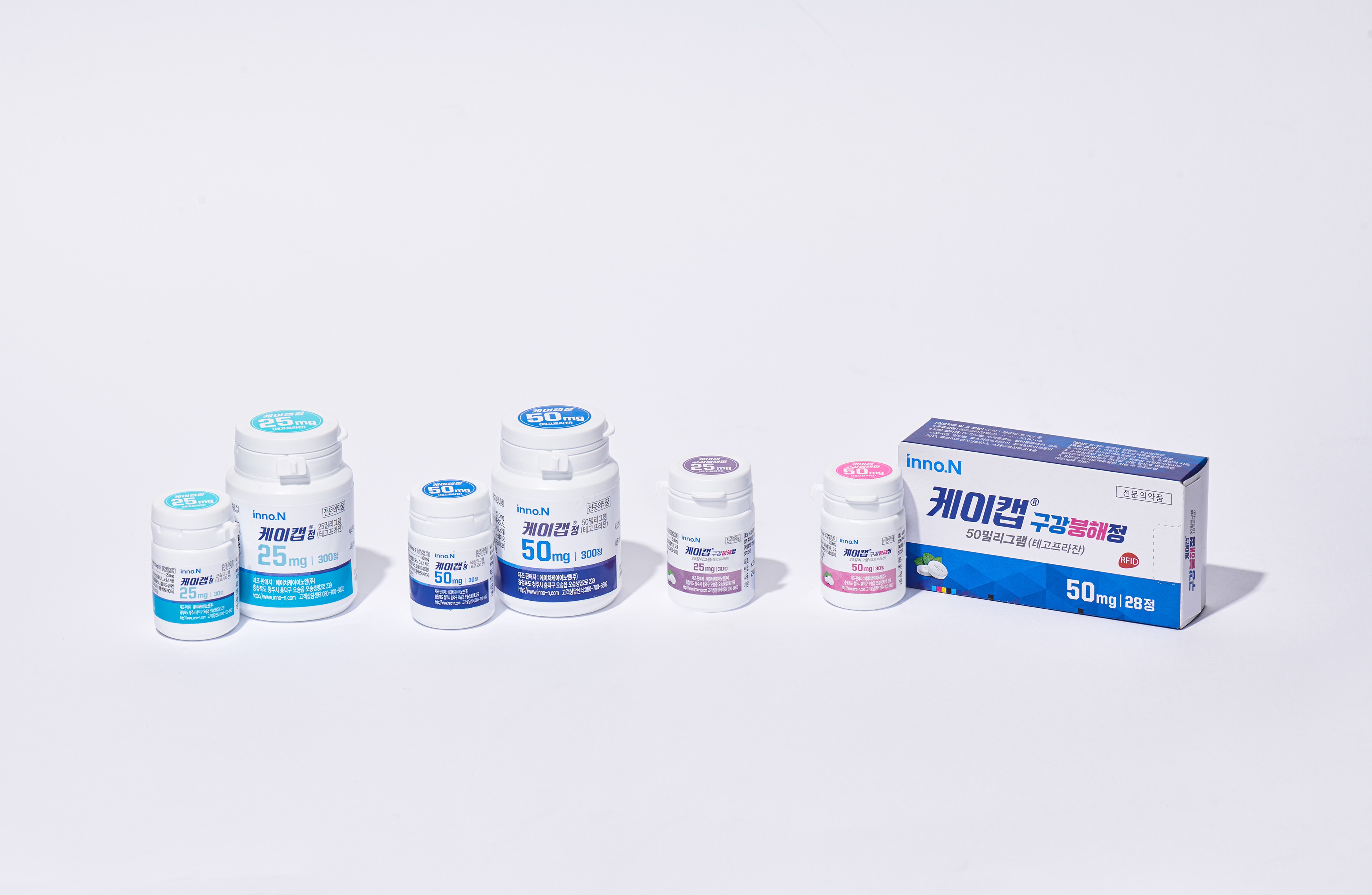
Photo. HK inno.N's novel drug series for gastroesophageal reflux disease, K-CAB
HK inno.N announced on May 13 that K-CAB (ingredient name: Tegoprazan), its new gastroesophageal reflux disease (GERD) drug has claimed the top spot in monthly outpatient prescription sales for the first time since its release.
According to UBIST, a pharmaceutical market research firm, K-CAB—the 30th new drug developed in Korea—recorded KRW 20.8 billion in outpatient prescription sales in April 2026, rising to No. 1 among all 10,476 products tracked by UBIST, surpassing major global pharmaceuticals. K-CAB stands as the only domestic new drug among the top 10 products in outpatient prescription sales
Since its launch in March 2019, K-CAB has maintained a steep growth trajectory in sales. The product reached the KRW 100 billion milestone in annual outpatient prescription sales in the shortest time among domestic new drugs and continued its steady growth to exceed KRW 200 billion in annual sales last year.
Key drivers behind this growth include proven efficacy and safety backed by extensive clinical data and a diverse range of indications, fostering deep credibility within the medical community. K-CAB holds a market-leading portfolio of 159 clinical trials, more than any other P-CAB available domestically, and it is approved in Korea for the following five indications: △ erosive gastroesophageal reflux disease △ non-erosive gastroesophageal reflux disease △ gastric ulcer △antibiotic combination therapy to eradicate Helicobacter pylori △ maintenance therapy (for 25mg only). The company is also actively expanding indications for K-CAB, having finalized Phase 3 trials for the prevention of NSAID-related gastric ulcers last year.
Furthermore, efforts to expand K-CAB’s global footprint are in full swing. Data from the U.S. Phase 3 clinical trials for the treatment of erosive esophagitis and the maintenance therapy were recently presented at 'Digestive Disease Week (DDW) 2026'—the world’s largest gastroenterology conference—capturing attention from experts. In this study, K-CAB decisively outperformed conventional PPIs in both the proportion of patients with complete healing at Week 2 and Week 8, and sustained healing outcomes in maintenance therapy. These findings confirm K-CAB’s competitiveness in the global peptic ulcer treatment market and have heightened expectations for its U.S. Food and Drug Administration (FDA) approval.
Dalwon Kwak, CEO of HK inno.N highlighted the significance of this achievement, “K-CAB’s steady rise is a result of the credibility we have established over time with healthcare professionals through our market-leading portfolio of clinical data and approved indications” and added, “With the product’s proven clinical performance based on the domestic and international patient data we have collected and the recent achievement of rising to the top-selling spot in monthly outpatient prescriptions, we are now focused on strengthening our global footprint as well as maintaining our domestic dominance.”
As of today, K-CAB has obtained regulatory approvals in 23 countries including South Korea, and has been licensed or exported to 55 countries, recognized for its therapeutic excellence. Sebela Pharmaceuticals, HK inno.N’s U.S. partner, submitted a New Drug Application (NDA) to the U.S. Food and Drug Administration (FDA) in January this year. (END)
(Reference Information)
Status of K-CAB outpatient prescription sales in Korea
(Based on: outpatient prescription sales / Unit: billion won)
Category | 2019 | 2020 | 2021 | 2022 | 2023 | 2024 | 2025 | Cumulative |
Total | 30.4 | 77.1 | 110.7 | 132.1 | 158.2 | 196.9 | 217.9 | 923.3 |
Source of clinical study data on K-CAB
- According to the PubMed medical database, there are 159 studies on Tegoprazan (including review articles).
P-CAB (Potassium Competitive Acid Blocker / HK inno.N K-CAB (Tegoprazan))
- The mechanism of P-CAB is to block the secretion of gastric acid by competitively binding directly to the potassium ions of the proton pump without the need for activation by gastric acid; i.e., by interfering with the binding of potassium ions to the proton pump.
- Therefore, P-CAB can be administered irrespective of food, provide a fast, strong effect of inhibiting gastric acid secretion from the first day of dosing, and have a long-acting property, compared to PPIs, ensuring superior prevention of overnight gastric acid secretion.
Proton Pump Inhibitors (PPI) / lansoprazole, etc.
- Gastric acid secretion is blocked by irreversible inhibition of the gastric proton pump (Hydrogen/Potassium Adenosine Triphosphatase; H+/K+-ATPase; Proton pump) involved in the final step of gastric acid secretion.
- PPIs are prodrugs that are activated by gastric acid and then bind to the proton pump for inhibition of gastric acid secretion; therefore, they should be administered before food, with the maximal effect achieved after repeated administration (3 to 5 days).
Status of K-Cab entry into the world markets
Overall countries (South Korea and tech transfer + finished product export; a total of 56 countries) | ▶South Korea (self-developed) ▶Tech transfer: China, US, Canada, Brazil ▶Finished product export: - Mongolia, India, South Africa, Australia, New Zealand, Hong Kong, Macao - Southeast Asia (6 countries): Indonesia, Thailand, Philippines, Vietnam, Singapore, Malaysia - Eastern Europe (5 countries): Russia, Kazakhstan, Uzbekistan, Ukraine, Belarus - Central and South America (17 countries): Mexico, Argentina, Colombia, Peru, Chile, Ecuador, Uruguay, Republic of Paraguay, Bolivia, Venezuela, Dominican Republic, Guatemala, Honduras, Nicaragua, Costa Rica, Panama, El Salvador - Middle East / North Africa (16 countries): Saudi Arabia, Jordan, Lebanon, UAE, Oman, Kuwait, Bahrain, Iraq, Qatar, Algeria, Egypt, Sudan, Ethiopia, Morocco, Yemen, Libya |
Launched (20 countries)
| South Korea, China, Philippines, Mongolia, Mexico, Indonesia, Singapore, Peru, Chile, Colombia, Dominican Republic, Guatemala, El Salvador, Nicaragua, Honduras, Malaysia, Panama, Thailand, India, Russia |
Expected to be launched (approved) | Ecuador, Republic of Paraguay, Uzbekistan |
Under development/approval preparation/review | |