HK inno.N Adds Sixth Indication for K-CAB — Broadest Label among P-CABs in South Korea
HK inno.N Adds Sixth Indication for K-CAB — Broadest Label among P-CABs in South Korea
- Approval confirms efficacy in preventing peptic ulcers associated long-term NSAID use
- Combined gastrointestinal protection and symptom relief reinforce K-CAB’s leadership in the P-CAB market
- K-CAB 25 mg tested alongside 11 different NSAIDs, offering broad prescribing flexibility and a confirmed safety profile
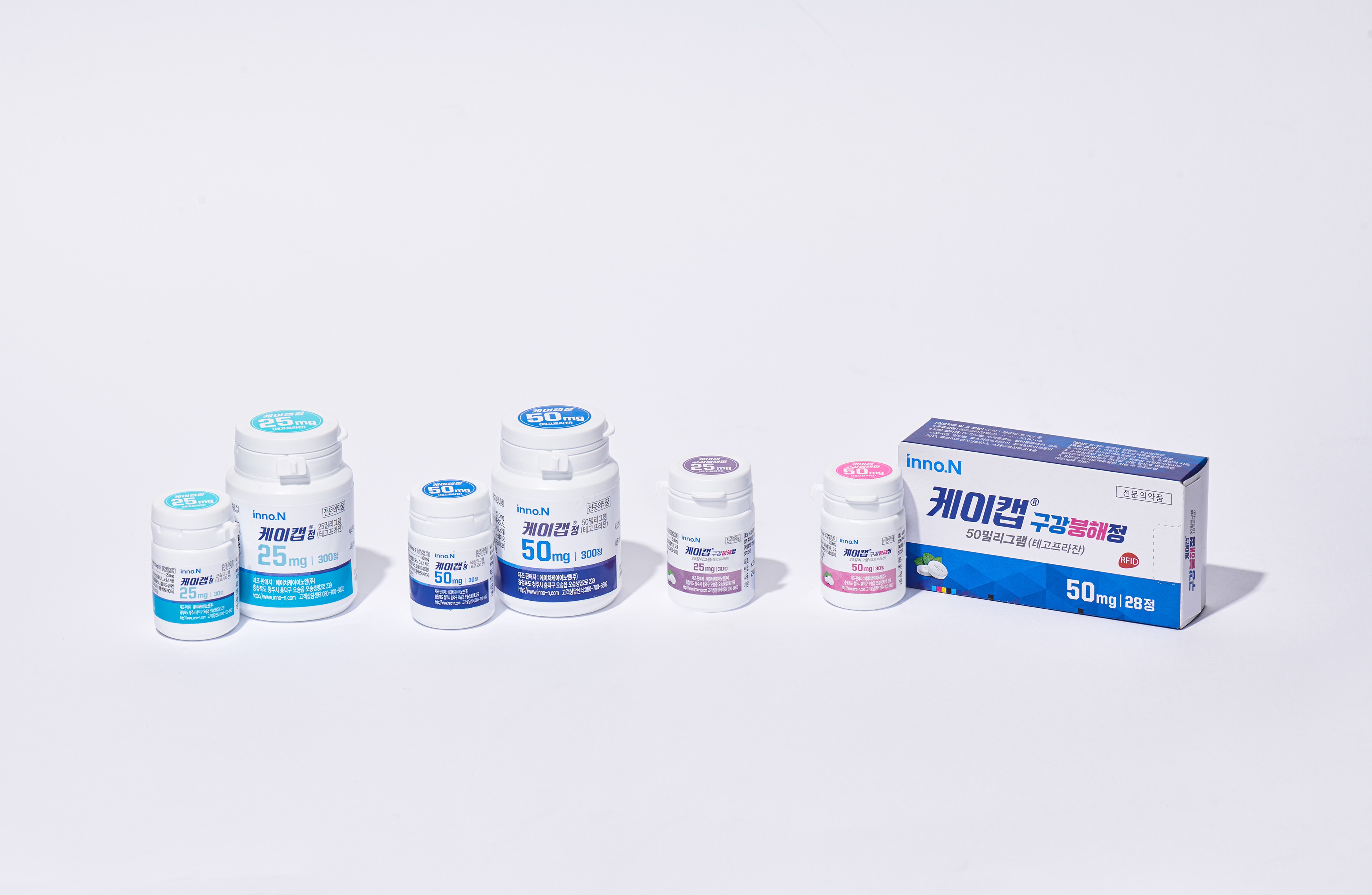
Photo. HK inno.N's novel drug series for gastroesophageal reflux disease, K-CAB
HK inno.N has broadened the therapeutic reach of its gastroesophageal reflux disease (GERD) drug K-CAB (tegoprazan) with a sixth approved indication — non-steroidal anti-inflammatory drug (NSAID)-associated peptic ulcers — further cementing its leadership in the potassium-competitive acid blocker (P-CAB) drugs.
The company announced on the 27th that the Ministry of Food and Drug Safety (MFDS) granted approval for a new indication of K-CAB, “the prevention of NSAID-associated peptic ulcers”
With this latest approval for the new indication, K-CAB now carries six indications: treatment of erosive GERD; treatment of non-erosive GERD; treatment of gastric ulcers; eradication of H. pylori concurrently given with appropriate antibiotic therapy in patients with peptic ulcer and/or chronic atrophic gastritis; maintenance of healed erosive GERD; and prevention of NSAID-associated peptic ulcers (gastric and/or duodenal ulcers). This gives K-CAB the broadest indication profile among the P-CAB class drugs.
The expanded label solidifies K-CAB’s standing as the leader of the P-CAB market. With NSAID use rising in step with aging populations and the growing prevalence of chronic pain, K-CAB is expected to introduce a much-needed alternative in a segment long dominated by proton pump inhibitors (PPIs) for concomitant prescribing, enabling patients to focus on their underlying condition without the burden of gastrointestinal side effects.
The clinical trial supporting the new indication was conducted in patients on long-term NSAID therapy. The trial compared K-CAB 25 mg with lansoprazole 15 mg, a PPI, to evaluate efficacy and safety in the prevention of gastric and duodenal ulcers.
On the primary efficacy endpoint — the incidence of gastric and duodenal ulcers at 24 weeks — K-CAB demonstrated non-inferiority to lansoprazole. At 12 weeks, a heartburn-free rate was significantly greater in the K-CAB arm compared with the lansoprazole arm.
The trial participants were treated with a total of 11 different NSAIDs, underscoring K-CAB’s prescribing flexibility and safety. These comprised eight non-selective NSAIDs, including pelubiprofen, naproxen and meloxicam, and three COX-2 selective inhibitors, including celecoxib. K-CAB’s safety was also confirmed over 24 weeks of continuous administration.
“The management of gastrointestinal complications from long-term NSAID use has been a significant unmet medical need worldwide,” commented Dal-won Kwak, CEO of HK inno.N. “The robust clinical evidence generated for this new indication is expected to serve as a key catalyst for K-CAB’s quantum leap into a blockbuster new drug in both the domestic and global markets.”
K-CAB, the 30th homegrown new drug in South Korea, has led the domestic outpatient prescription market for peptic ulcer treatment since its launch in March 2019, driven by its rapid onset of action and demonstrated safety over six months of continuous use. In April, it became the first single-agent domestically developed new drug to surpass KRW 1 trillion in cumulative outpatient prescription sales.
K-CAB has been out-licensed or supplied under finished drug product export agreements in 55 countries and is currently marketed in 20 markets, including South Korea, China and several Latin American countries, where its efficacy and excellence continue to be recognized. In January this year, HK inno.N’s U.S. partner Sebela Pharmaceuticals submitted a New Drug Application to the U.S. Food and Drug Administration (FDA), paving the way for K-CAB’s upcoming launch in the world’s largest pharmaceutical market. (END)
(Reference Information)
P-CAB (Potassium Competitive Acid Blocker / HK inno.N K-CAB (Tegoprazan))
- The mechanism of P-CAB is to block the secretion of gastric acid by competitively binding directly to the potassium ions of the proton pump without the need for activation by gastric acid; i.e., by interfering with the binding of potassium ions to the proton pump.
- Therefore, P-CAB can be administered irrespective of food, provide a fast, strong effect of inhibiting gastric acid secretion from the first day of dosing, and have a long-acting property, compared to PPIs, ensuring superior prevention of overnight gastric acid secretion.
Proton Pump Inhibitors (PPI) / lansoprazole, etc.
- Gastric acid secretion is blocked by irreversible inhibition of the gastric proton pump (Hydrogen/Potassium Adenosine Triphosphatase; H+/K+-ATPase; Proton pump) involved in the final step of gastric acid secretion.
- PPIs are prodrugs that are activated by gastric acid and then bind to the proton pump for inhibition of gastric acid secretion; therefore, they should be administered before food, with the maximal effect achieved after repeated administration (3 to 5 days).